Decomposing the Anthropocene

I was invited to this exciting workshop at the University of Tokyo in February as a discussant. Looks like there are other fellow anthropologists out there exploring the role of chemicals in making humans healthy and/or sick. Jump in if you’re interested in the topic and happen to be in the area!

Event page HERE

UTokyo Cultural Anthropology Seminar/COVID-19 and Humanities International Symposium

Decomposing the Anthropocene

Exploring Chemical Ethics Beyond the Laboratory

Chemical ethics is often considered a nascent area in which chemists think of ethical guidelines for conducting chemical research. However, as recent debates on the Anthropocene and metabolism have made clear, it is not only chemists who produce, consume, and emit chemicals. Also, as the various studies in chemo-ethnography have revealed, attention to the distribution and dispersal of chemical substances in the environment has become essential when thinking about the lives of humans and non-humans. Therefore, this symposium examines the everyday ethics of chemical-entangled beings based on examples from East Africa and Japan. Through this endeavor, it offers the unique opportunity to reexamine the Anthropocene from a more concrete and especially microscopic level.

Date: 4th Feb, 2024 (Sun), 2 pm to 6 pm

Venue: Collaboration Room1 4th floor on Building 18 in Komaba Campus, University of Tokyo(HYBRID Onsite+Online)

Chair: Maki Kitagawa (University of Tokyo)

14:00 – 14:15 Introduction: Akinori Hamada (University of Tokyo)

14:15 – 15:00 Paper 1 : Wenzel Geissler / Ruth Prince (University of Oslo) “Tracing the metabolites of history: studying the toxic aftermath of the1950s Pare-Taveta malaria eradication experiment”

15:00 – 15:45 Paper 2 : Mayumi Fukunaga (University of Tokyo) “Terra-reforming for socio-ecological salvation: Ways of governing aquatic nutrients for healing a stranger sea”

15:45 – 16:15 Break

16:15 – 17:00 Paper 3 : Ruth Prince (University of Oslo) “Toxic exposures and urban living: notes from Kisumu, Kenya”

17:00 – 17:20 Comment: Gergely Mohacsi (Osaka University)

17:20 – 18:00 Discussion

18:00 – Social Gathering
Embodied Value Theory

February seems to be the month for international workshop. This 1, of which I’m proud to be a discussant, is organized by The Anthropological Institute of Hiroshima (TAIHI) and revolves around two quite specific themes dear to my heart: #incommensurability and #embodiment. It is probably the first time for me to visit Hiroshima University not as an instructor, but a researcher—except the annual meeting of the Japanese Anthropological Association, which was held here some years ago. Feel free to join us either at the venue or online!

https://taihi.org/events/stefan-ecks/

The Anthropological Institute of Hiroshima (TAIHI) is pleased to announce a lecture by Dr. Stefan Ecks on embodied value theory, the novel anthropological theory that explains how living entities value life by way of commensuration. The lecture will take place at Hiroshima University at 4:00 p.m. JST on February 20, 2023. You are invited to take part either at the venue or online. Please kindly register your name in advance by submitting the form below.

Embodied Value Theory

Value theory has always been part of anthropological theory, but only implicitly. ‘Culture’ was basically defined as a pattern of values. An explicit anthropological discussion of value is fairly recent. Some believe that a general value theory can be achieved. Others think that anthropology is all about discovering cultural incommensurabilities that cannot contain a universal notion of value. The greatest conceptual challenge is if cultural values (in the plural) can be synthesized with economic and exchange-based value (in the singular). Here I argue that values and value can be brought together within an embodied value theory (EVT). At the core of this new theory of value is embodied life as the ground and goal of valuing. Life values living, and life tries to make the most of life by valuing different possibilities. I show that all valuing rests on comparisons, and that the infinite similarities between different entities can only be decided in pragmatic contexts. I propose that biocommensurations, where at least one entity in a comparison is alive, is the universal form of valuing.

Date: February 20, 2023, 4:00-6:00 p.m. JST

Venue: Hiroshima University, Higashi-Senda Innovative Research Center (2nd Floor, Room M204) and online (Zoom)

Program :
4:00-5:00 p.m. Lecture by Dr. Stefan Ecks
5:00-6:00 p.m. Comments followed by open discussion

Commentators :
Akinori Hamada (Tokyo University)
Mohacsi Gergely (Osaka University)

Moderator :
Makoto Nishi (Hiroshima University)

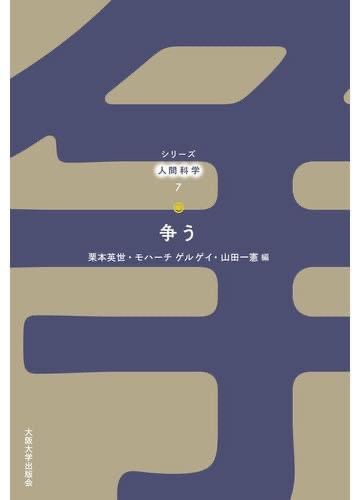
『争う』人間科学シリーズ7

「コンフリクト」というテーマとの5年の付き合いに一区切りつきました。「争う=war (p̶e̶a̶c̶e̶)」と思い込んでいるみなさんにオススメの一冊〜。裁判所から戦場、薬草園、また森林や学校まで、人と生物が闘って共に生きる日々の営みを、人類学者、心理学者、教育学者、動物研究者などが語ります。どうぞお楽しみください🙄

http://www.osaka-up.or.jp/books/ISBN978-4-87259-624-3.html

概要

争いは、進歩や発展の原動力か?回避・解決すべき課題か?――人間とは争う動物である。もちろん、人間以外のすべての生き物も、自らが生き残るために、そして子孫を残すために、同種内で、および他の種の生き物と日々争っている。それはふつう「生存競争」と呼ばれる。しかし、人間にとっての争いは、やはり特別な意味合いを有している。人口が爆発的に増加し、南極を除く地球の陸地のほぼ全体に生息域を広げ、そして高度に発達した国家と社会を形成した結果、人間は、国家と社会の枠組みの中で、および広く地球環境の中で、多種多様な争いを経験している。それは、食と性をめぐるたんなる「生存競争」という次元にとどまらない、複雑な様相を呈している。現代世界は、争いに満ちているといっても過言ではない。争いは、進歩や発展の原動力であると同時に、回避あるいは解決すべき課題でもある。
本書には、教育学、心理学、文化人類学、動物行動学、共生学等、人間科学のさまざまな専門分野から争いというテーマにアプローチした成果が収められている。第1部では、学校、野猿公苑周辺、そして裁判といった様々な制度や空間における争いが考察されている。第2部では、日系ブラジル人やインドネシア、ベトナムを対象として、研究者が調査研究の対象としている人々における「争い」をいかに発見するのか、そしてそのことが、対象の人々のより深い理解にいかにつながるのかを知ることができる。第3部では、災害復興、家族・恋人間の暴力、オセアニアの伝統文化を事例に、私たちが争いからいったい何を学ぶことができるのか、考えを巡らせる。
「争う動物」である人間は、他の存在との共存や共生をいかに実現することができるのか。本書はこの根源的な問いに対する人間科学からの挑戦である。

目次

 はじめに
第1部 争いの場
 第1章 時として泥沼化する保護者対応トラブル ―教師と保護者の争い
 第2章 現場を共有することで生じるサルと人間の軋轢
 第3章 公判で争う―法の想定を科学的視座から考える
第2部 争いの発見
 第4章 日本とブラジルを往還する家族の生活とコンフリクト
 第5章 主食の変化にみる「争い」 ―インドネシア・パプア州における糖尿病の事例から
 第6章 感染症という闘いと共生
第3部 争いからの学び
 第7章 争いとしての災害
 第8章 闘争後の闘争―トラウマティックな関係性の再演と回復
 第9章 伝統文化をめぐる争い

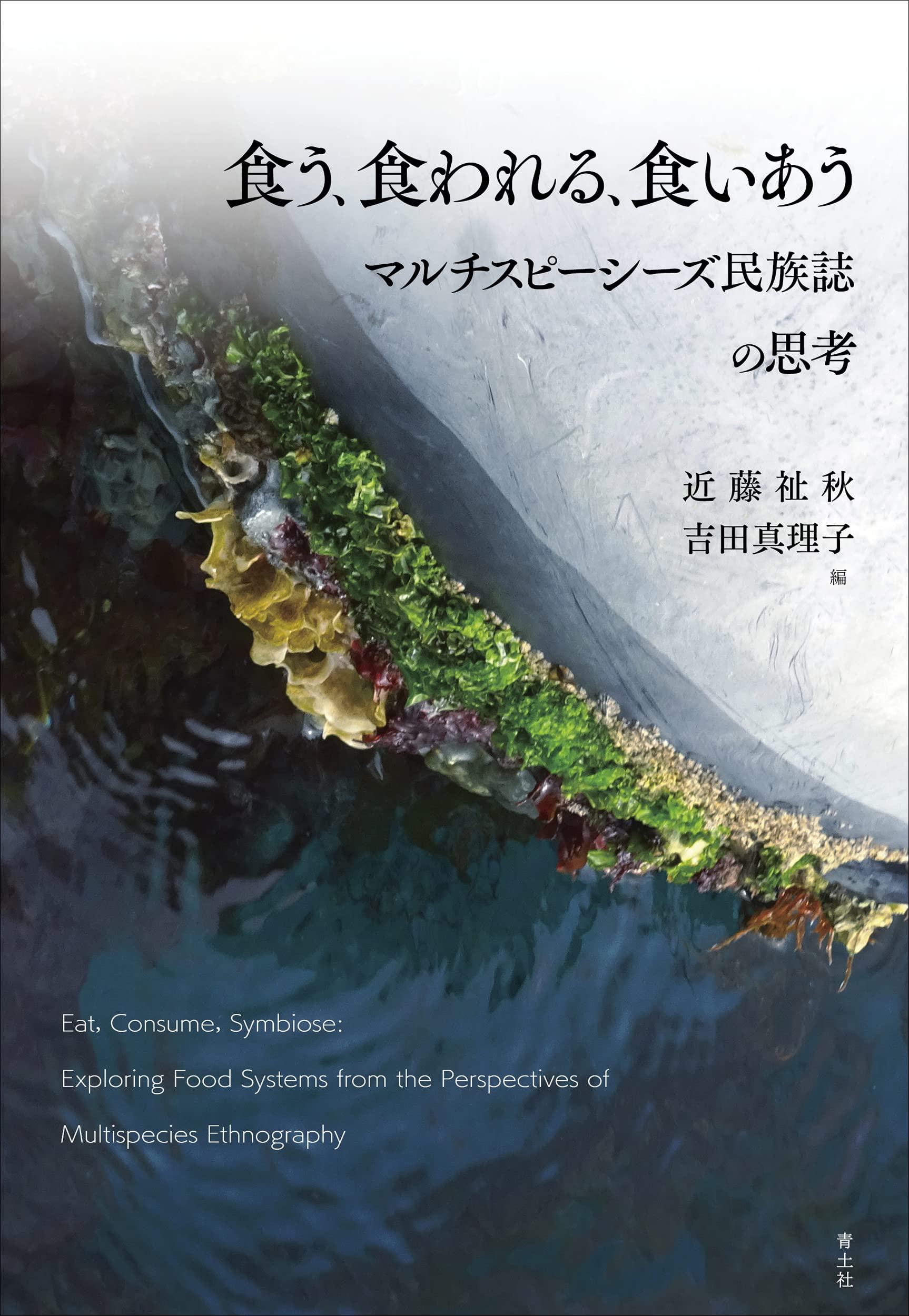
合評会『食う、食われる、食いあう:マルチスピーシーズ民族誌の思考』 

2月に広大の合評会でコメントさせていただくことになりました。ホットな課題で、人間以上の民族誌を一緒に考えることは楽しみです。

第55回中四国人類学談話会 合評会『食う、食われる、食いあう:マルチスピーシーズ民族誌の思考』
関連URL:http://www.jasca.org/meetings/meeting.html#chushikoku

第59回マルチスピーシーズ人類学研究会との共催
関連URL:https://www2.rikkyo.ac.jp/web/katsumiokuno/multi-species-workshop59.html  

日時:2022年2月5日(土)14:00-16:30

開催方法:オンライン(ZOOM)
※主催者と登壇者のみ対面で実施いたします。

概要

神戸大学の近藤祉秋さん、広島大学の吉田真理子さんをお招きし、お二人の編著『食う、食われる、食いあう:マルチスピーシーズ民族誌の思考』(2021年10月刊行、青土社)の合評会を行います。  

マルチスピーシーズ民族誌は、「人間と他種(さらには生物種にとどまらず、ウィルス、機械、モノ、精霊、地形も含む)の絡まりあいから人間とは何かを再考する分析枠組み」(p13)であり、現代人類学において影響力のあるアプローチの一つであると言えます。本書の序章では、この人類学の方法自体が科学技術社会論、人文地理学、政治生態学など複数の研究潮流の絡まりあいの中で躍動的に展開していること、それゆえに他の研究分野を触発しうる可能性を大いに持つことが力強い言葉で示されています。

本談話会では、評者としてモハーチ・ゲルゲイさん(大阪大学)、福永真弓さん(東京大学)、山田俊弘さん(広島大学)の3名をお招きし、それぞれ科学人類学、環境社会学、そして生態学の立場からコメントをいただきます。分野を超えた自由な対話の中で、マルチスピーシーズ民族誌が私たちにいかなる「思考の糧」を与えてくれるのか、欧米を中心に発展してきたこの手法と日本国内の学術的議論の関係にも目配りしつつ、改めて考える機会としたいと思います。

プログラム

14: 00~14: 05 開会挨拶
14: 05~14: 15 近藤祉秋(神戸大学)・吉田真理子(広島大学)「趣旨説明」
14: 15~14: 30 モハーチ・ゲルゲイ(大阪大学)「人類学・STSから」
14: 30~14: 45 福永真弓(東京大学)「環境社会学から」
14: 45~15: 00 山田俊弘(広島大学)「生態学から」
15: 00~15: 10 休憩
15: 10~15: 45 編者・執筆者からのリプライ
15: 45~16: 30 総合討論


On Strategic Paranoia

Glocol Seminar 106 @ Suita, Osaka University

Time: Tuesday, November 5, 2013, 16:30-18:30
Place: Alumnus Union Building (Icho Kaikan) of Osaka University, Medical School
.
ABSTRACT: Today, more than two decades after the onset of the 1990s wars in former Yugoslavia, many people in Serbia feel no happier with local, European and world politics. After a short-lived period of economic growth and political stability, the country has returned to a state of dissatisfaction and uncertainty. Many want to demystify and confront wartime nationalism, which is increasingly felt as a historical and political burden. Yet they often resist the manner in which they feel that some projects of reconciliation and of European integration are being forced upon them. Their suspicion is that such projects hide hidden agendas. Tensions arise between these two simultaneous needs, for self-reflection on and criticism of the country’s history on the one hand, and for a freedom to contest the perceived public denigration of Serbia, on the other. In such a context, certain past events as well as predictions of the future are interpreted through various conspiratorial narratives. Paranoid claims seems to serve as an organising device through which certain social conditions and predicaments are evaluated. The paper proposes to analyse what might be termed ‘auto poetic and strategic paranoid observations’ through coming to terms with the manner, or the rhetorical style, in which they are uttered. The manner is one of exaggeration. Importantly, paranoid worldviews, that exaggerate in order to attest specific historical events and their logic, at least on the subjective level, have a political purchase in contemporary Serbia denied to more rational forms of discourse.
.