An experimental ethnography of food localization movements and health behaviour
Contrary to the linear view of global health, where distinct but comparable bodies seem to add up to a thriving globe, human well‑being in other public health realms is increasingly understood as a looping effect of metabolic processes, changing local ecosystems, and planetary cycles. This dynamic highlights the interwoven nature of the Anthropocene, where ecologies, public health infrastructures, and bodies feed into one another, transforming scales and relationships in increasingly open and complex ways.––Mohácsi, How to survive medicine in the Anthropocene? (2025: 321)
From diabetes to permaculture, my research has long revolved around various issues of eating and food—without ever making them an explicit agenda. This new project brings these issues into focus by examining the local stakes of planetary health in the region of the Inland Sea of Japan (Setouchi). Together with my colleagues, I examine how food practices that respond to climate change and biodiversity loss emerge within local contexts, and how they affect the health of communities and their residents, by bringing nutrition science and ethnographic research into an open conversation.
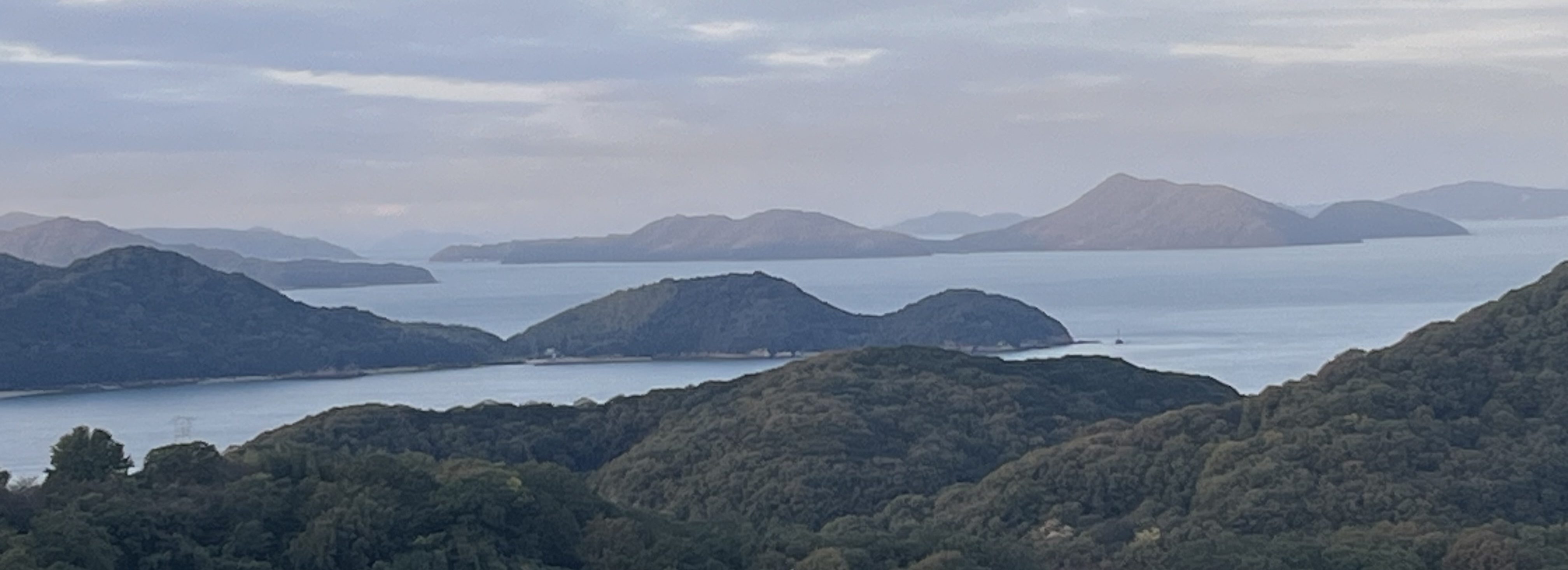
The project examines the challenges and possibilities for public health in an age of climate change, through the concept and methodology of planetary health. Over the past half-century, global health indicators have improved even as the state of the planet has deteriorated, with climate change, biodiversity loss, and air pollution emerging as significant threats to health. These developments point to a feedback loop linking human health with local ecosystems and planetary-scale processes. While building on existing research in global health, planetary health also departs from it. Whereas global health has primarily focused on health disparities, disease burdens across human populations, and the distribution of medicines and treatments, planetary health attends to the health of human and ecological systems together, treating them as inseparable. It has emerged as an interdisciplinary framework for understanding how human-induced environmental change affects health, addressing issues ranging from chronic respiratory disease to antimicrobial resistance.
As one focus within this broader effort, we are conducting research in the Seto Inland Sea region, taking food and eating as an entry point into these questions. Focusing on three overlapping modes of everyday practice—”eating,” “making,” and “healing/repairing”—our interdisciplinary team, spanning medical anthropology, nutritional science, and public health, works in collaboration with fishers, local organizations, and farmers to examine how changes in local livelihoods relate to community health and nutritional status, treating food as a concrete site where planetary and human health intersect.
Taking climate change as an opportunity rather than only a crisis, this project brings together perspectives from gender, healthcare systems, environmental pollution, and beyond to explore both the possibilities and the limits that planetary health offers for public health today.
Funded by the Japan Society for the Promotion of Science: Grant-in-Aid for Co-operative Research (B) 26K00258 (Terrestrial Health: An Experimental-Comparative Ethnography of Food Localization Movements and Health Behaviour)

